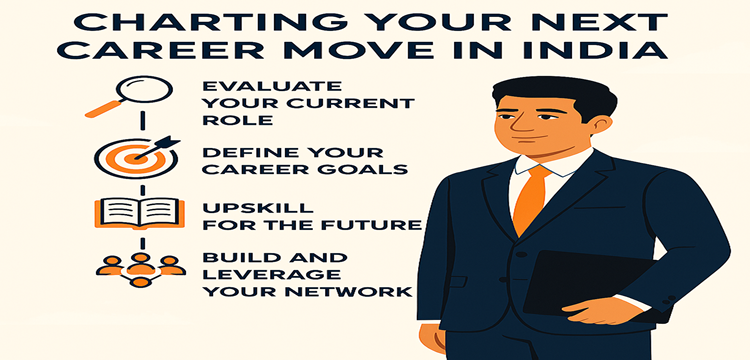

Charting Your Next Career Move in India
Planning your next career step is both exciting and challenging. In India’s fast-evolving job market—where technology, startups, and global opportunities are reshaping industries—having a clear strategy can make all the difference.
🔍 Step 1: Reflect on Where You Stand
- Evaluate your current role: Are you learning, growing, and being valued?
- Identify your strengths: Technical expertise, leadership, or creativity—know what sets you apart.
- Check alignment with values: Do your career choices match your lifestyle goals, whether it’s financial security, work-life balance, or global exposure?
🎯 Step 2: Define Your Career Goals
- Short-term goals: A promotion, a role change, or moving to a better company.
- Long-term goals: Leadership positions, entrepreneurship, or international opportunities.
- SMART goals: Keep them Specific, Measurable, Achievable, Relevant, and Time-bound.
📚 Step 3: Upskill for the Future
India’s job market is shifting toward digital-first skills.
- Certifications: Platforms like NASSCOM FutureSkills, Coursera, and UpGrad offer industry-recognized programs.
- Tech skills: Data analytics, AI, cloud computing, and cybersecurity are in high demand.
- Soft skills: Communication, adaptability, and problem-solving remain critical for leadership roles.
🤝 Step 4: Build and Leverage Your Network
- LinkedIn India: Optimize your profile and engage with recruiters and industry leaders.
- Job portals: Naukri.com, Shine.com, and Indeed India are key for opportunities.
- Professional groups: Attend conferences, webinars, and alumni meetups to expand your reach.
📑 Step 5: Create a Career Action Plan
- Timeline: Set milestones for skill-building, networking, and applications.
- Resources: Use Indian job portals, government initiatives like Skill India, and startup communities.
- Accountability: Track progress monthly and adjust based on results.
⚠️ Challenges to Anticipate
- Competition: India’s talent pool is vast—standing out requires continuous learning.
- Economic shifts: Be prepared for industry disruptions (e.g., IT services, manufacturing).
- Financial planning: Factor in savings before making bold moves like entrepreneurship or relocation.
✅ Key Takeaways
- Self-reflection is the foundation of career planning.
- Upskilling and networking are essential in India’s dynamic job market.
- A structured plan ensures you move forward with confidence and clarity.
Final Thought: In India’s fast-paced economy, opportunities are abundant for those who prepare strategically. By reflecting, upskilling, and networking, you can position yourself for a career that not only pays well but also fulfills your long-term aspirations.

Comments are closed